(02)Case studyAI food e-commerce

Blistro

An online restaurant where people order food and ask a chatbot about the menu. I built the storefront, the Stripe checkout, the accounts and an AI assistant that only answers from the restaurant's own documents.

My role
Full-stack developer
Built with
Next.js, Express, MongoDB
How it works Private build
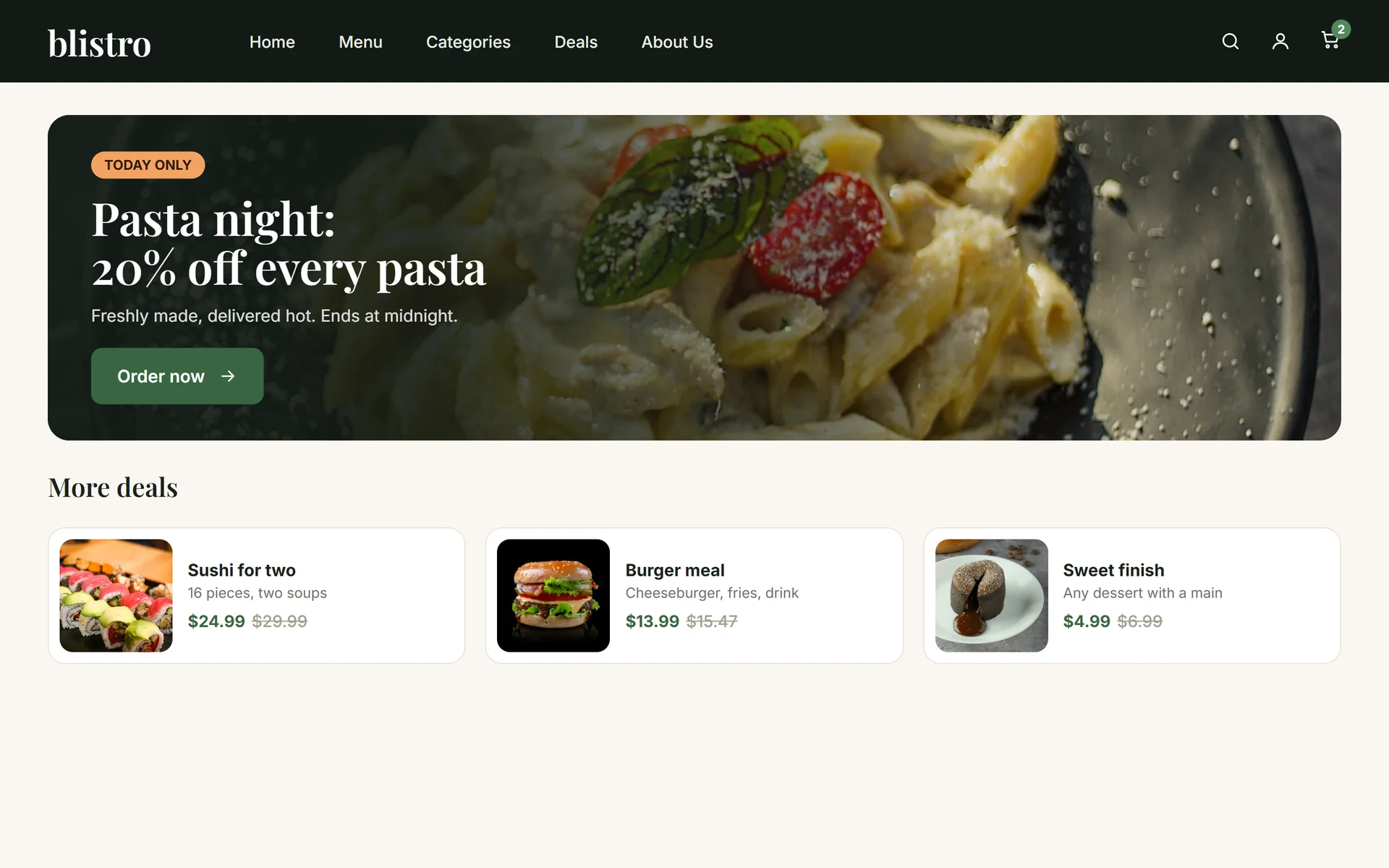
Blistro's deals page: pasta night and more
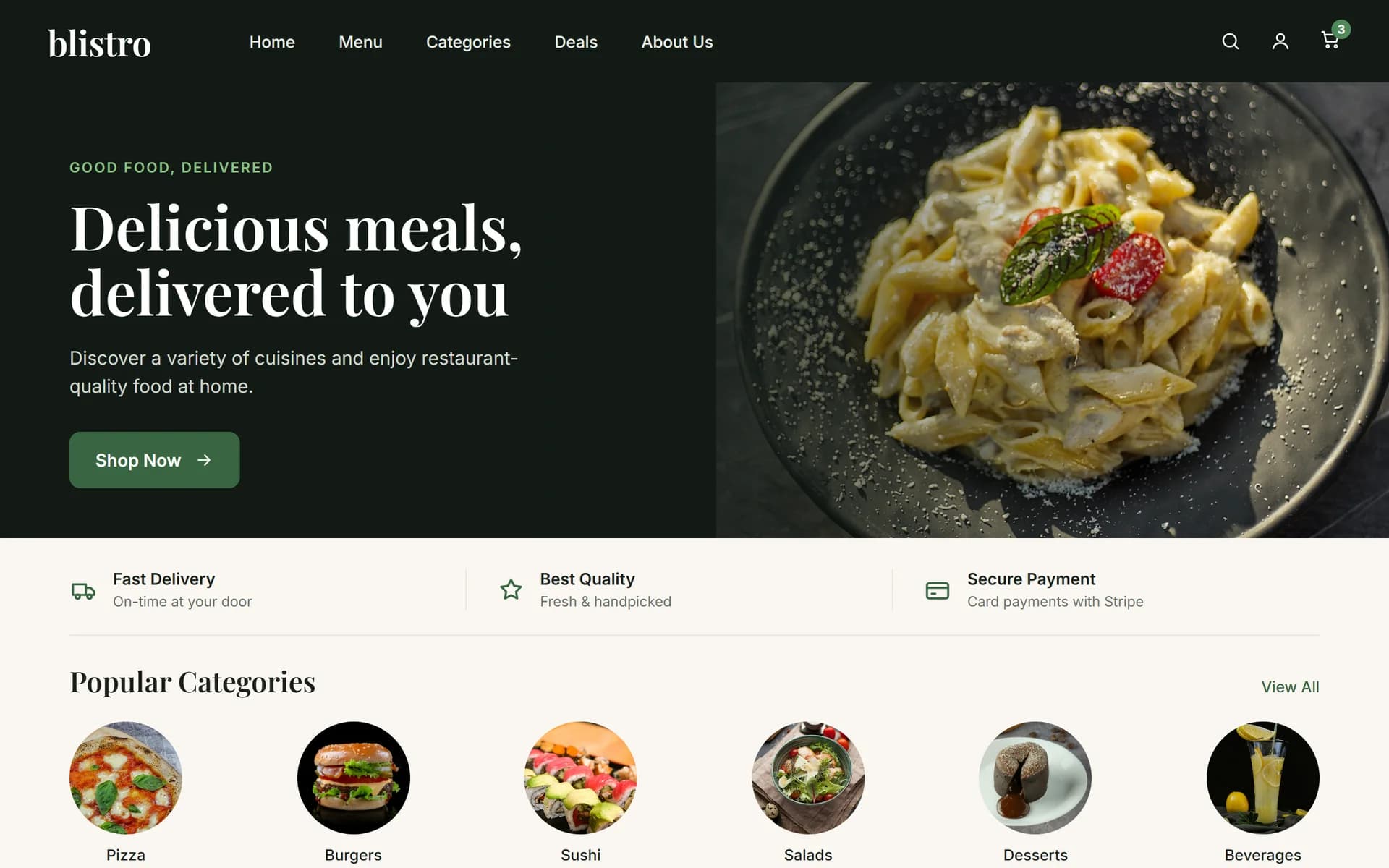
The Blistro storefront: delicious meals, delivered to you
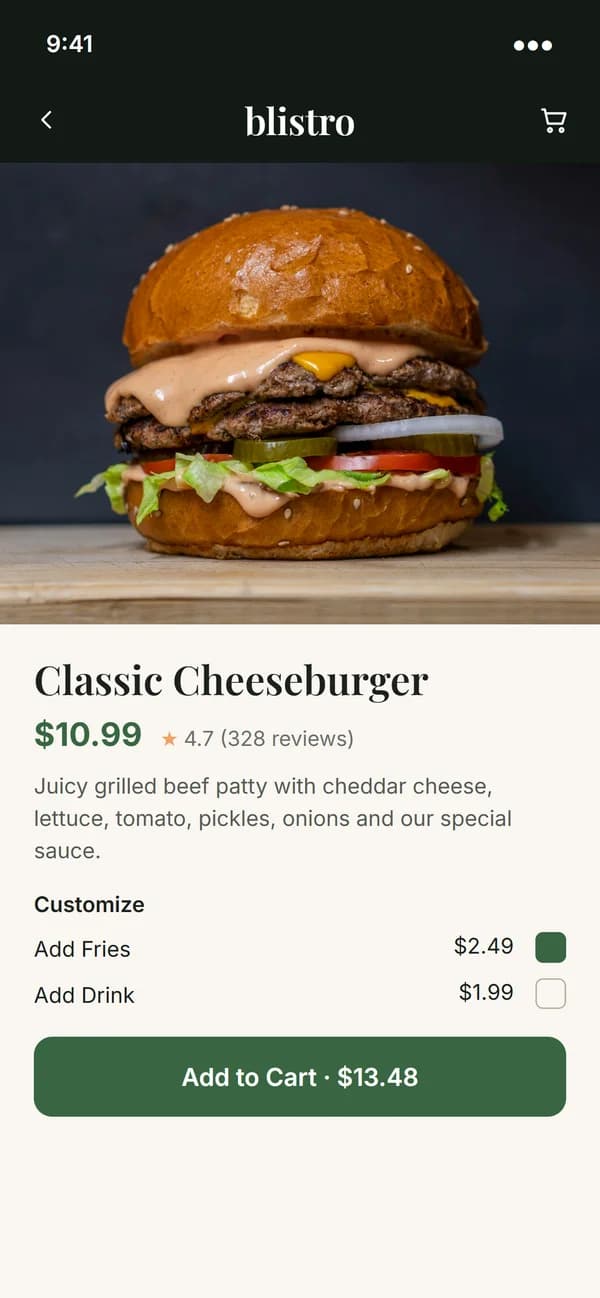
A Blistro dish on a phone, with extras and Add to Cart
(01)In short

01

What the client wanted

A real food-ordering site, not just a pretty menu: browse, build a cart and pay safely, and get instant answers about the food without waiting on staff.

02

What I built

The whole thing: the Next.js storefront, cart and Stripe checkout, accounts with Google sign-in, an Express and MongoDB backend, and Bistro Bot, the AI assistant.

03

The result

One platform that takes a customer from browsing to a paid order, with an assistant that answers from real sources instead of guessing.

screens built
8screens built
menu categories
6menu categories
steps from cart to paid
3steps from cart to paid
ways to sign in
2ways to sign in

Counted from the build

(02)What I built5 highlights

Good food, and good answers.

Each highlight says what it does for the people ordering, and how it works underneath.

01

A menu that's always current.

Every dish has its photo, price and rating, sorted into six categories with a price filter. On the phone it's one tidy list with search and category chips.

For customers

See what's on, what it costs and add it in one tap.

Under the hood

TanStack Query fetches and caches the menu from the Express API and refreshes it in the background.

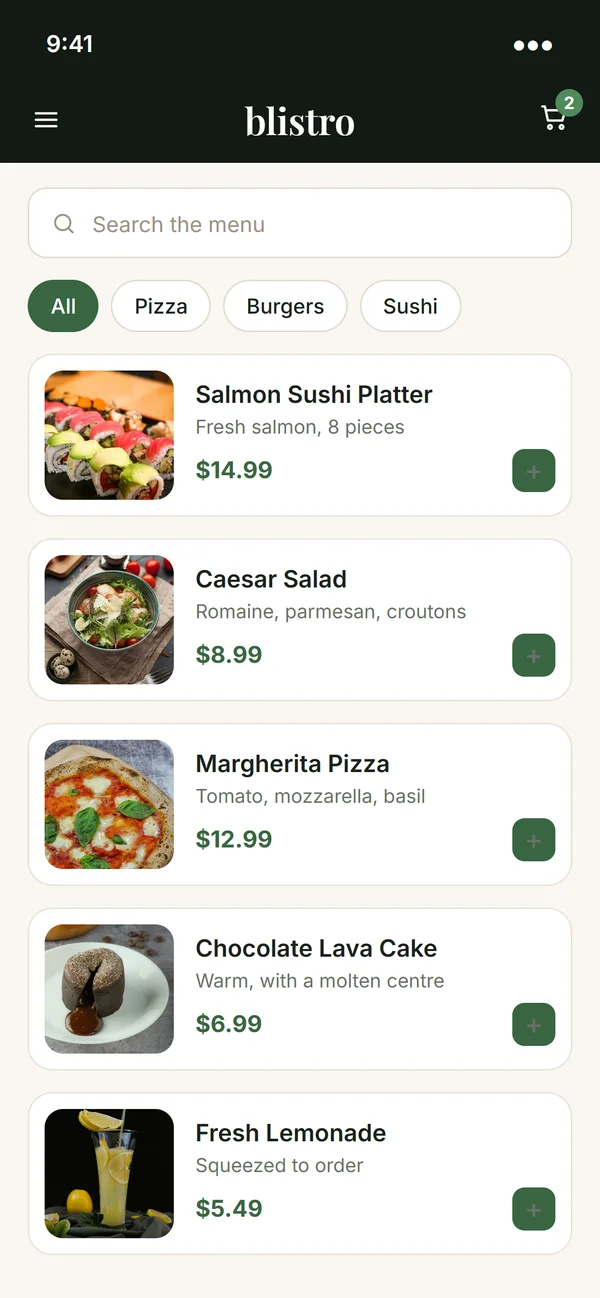
The menu with categories and a price filter
The menu on a phone

02

Ask the menu, get a real answer.

Bistro Bot answers questions about the food, from allergens to delivery areas. It only uses the restaurant's own documents, shows which one each answer came from, and says so when it doesn't know.

For customers

Ask "is this gluten-free?" and get a straight answer, any time.

Under the hood

Retrieval-augmented generation: LangChain and OpenAI, with the documents' chunks stored in MongoDB.

Bistro Bot answering from the restaurant's documents, with sources
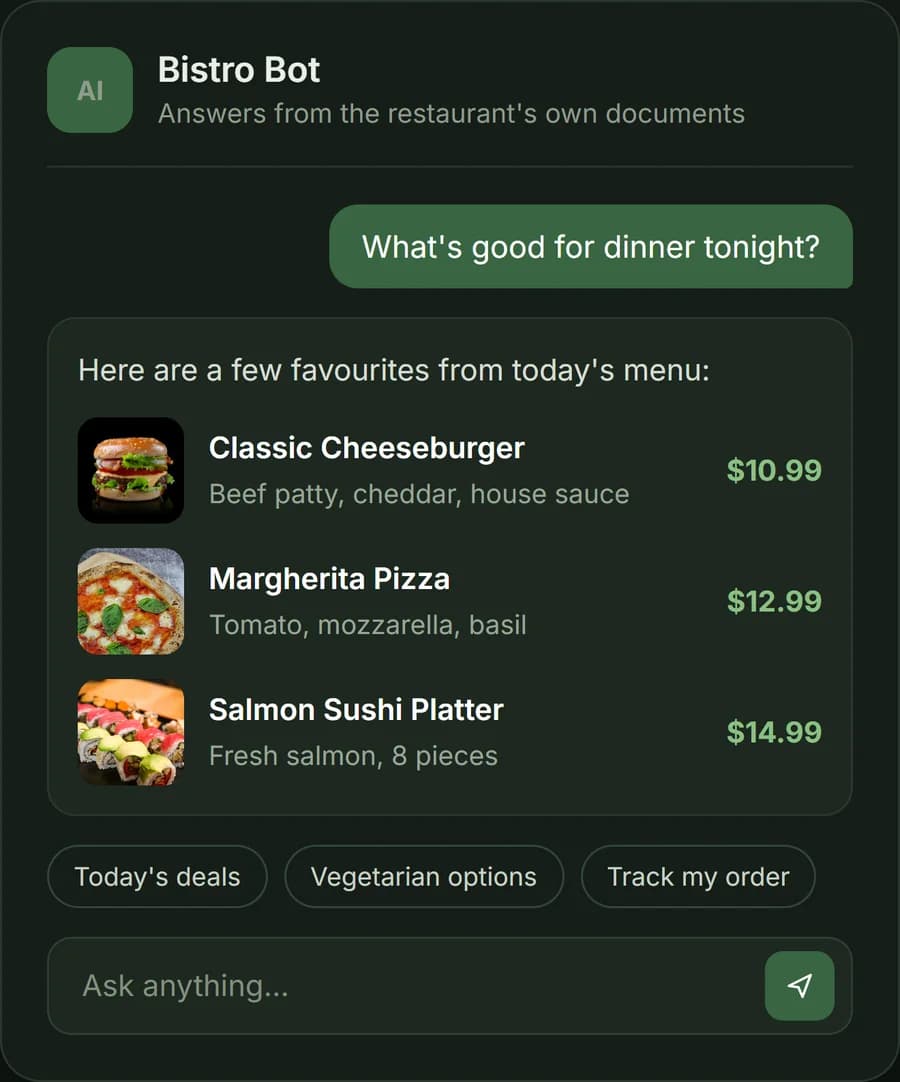
Bistro Bot suggesting dishes from today's menu

03

Pay in three steps.

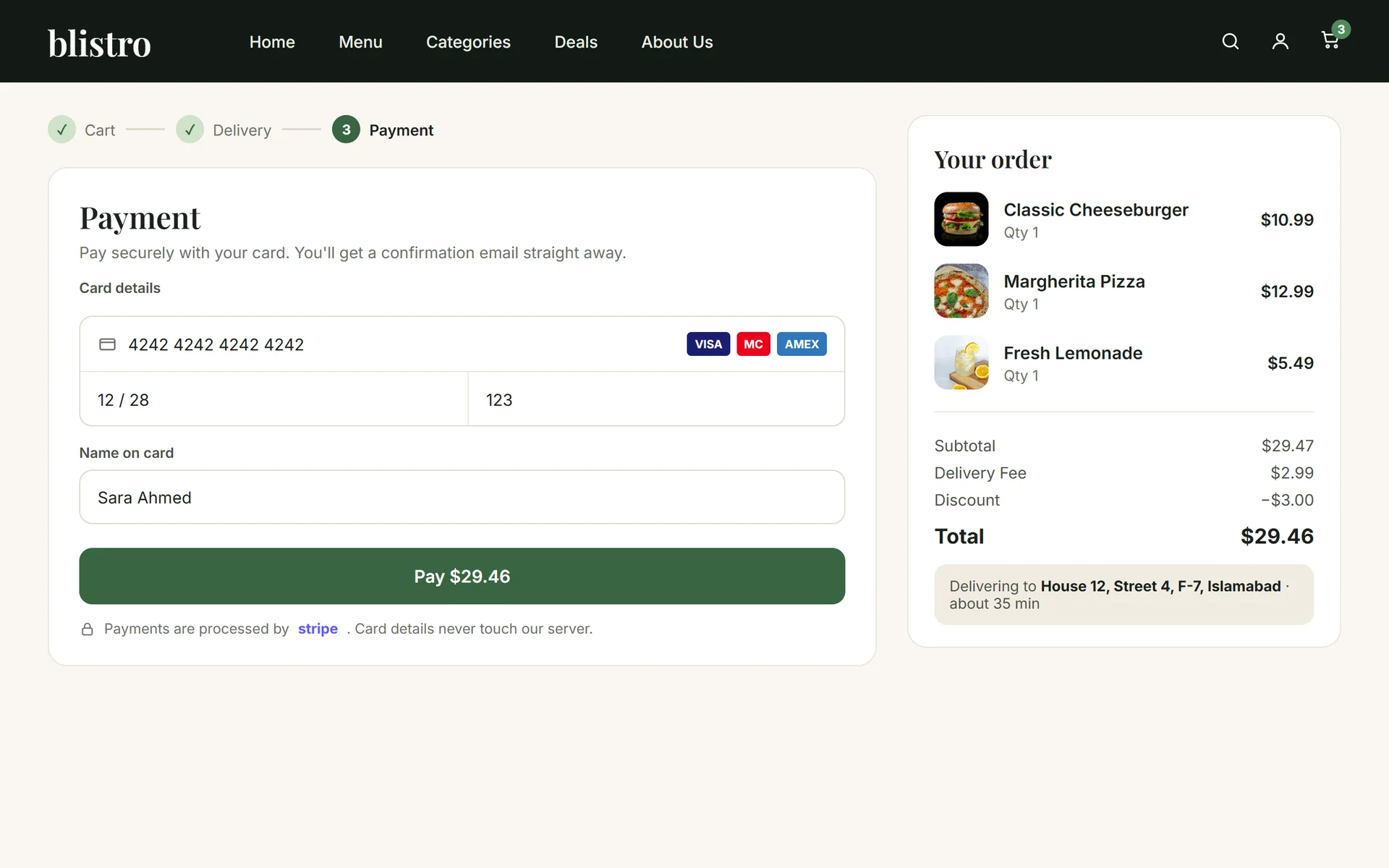
Cart, delivery details, payment. The order summary stays beside the form the whole way, and card payments go through Stripe.

For customers

Pay by card in a minute, and know exactly what you're paying for.

Under the hood

Stripe handles the card, so card details never touch our server. Forms are validated with React Hook Form and Zod.

The payment step with the order summary
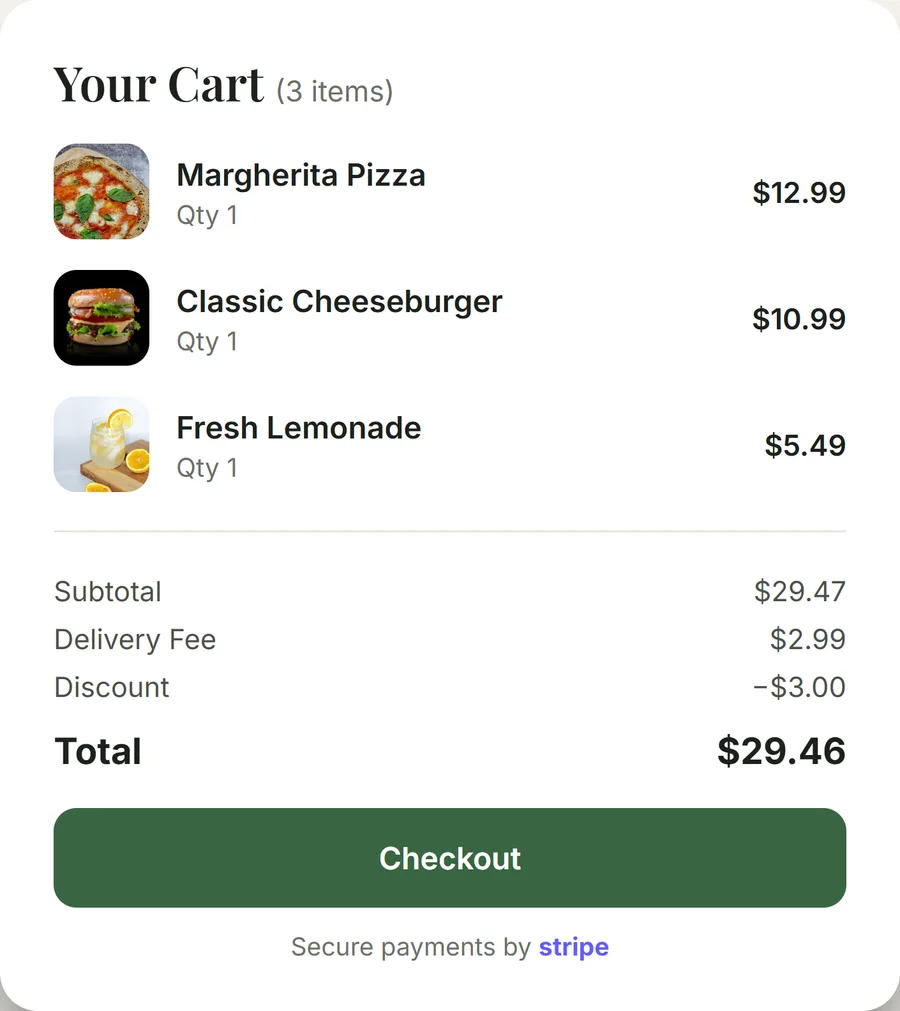
The cart with totals

04

From paid to on its way.

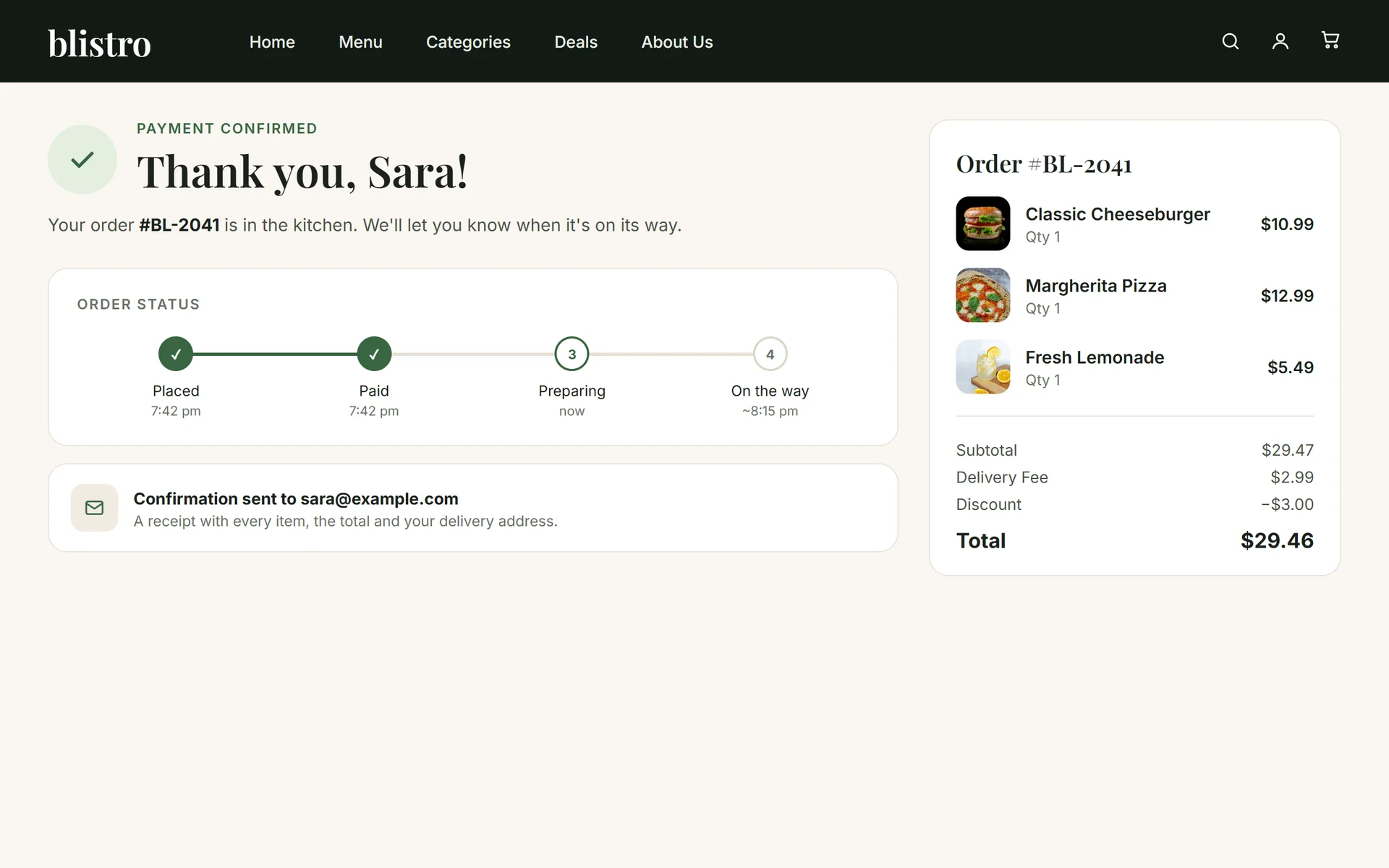
After paying, the customer sees the order go from placed to paid to preparing, and a confirmation email lands with every item and the total.

For customers

No wondering if the order went through.

Under the hood

Stripe's payment confirmation moves the order from pending to paid; Resend and Nodemailer send the email.

Order confirmed, with its status and the confirmation email

05

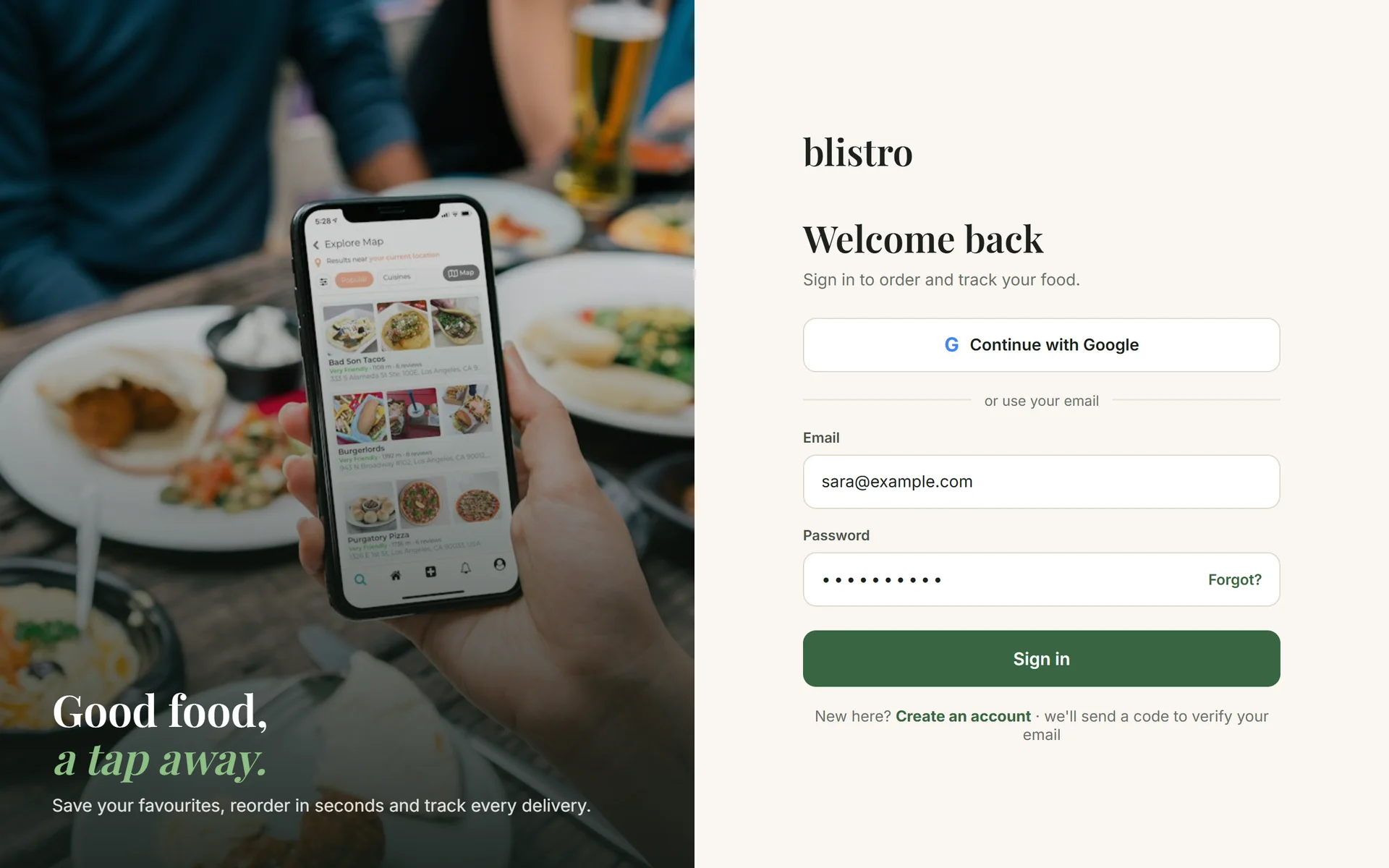
Sign in your way.

One tap with Google, or an email and password. New accounts verify their email with a code, and a forgotten password can be reset.

For customers

Your orders and favourites, saved to your account.

Under the hood

JWT sessions, Google OAuth, and email verification and reset codes sent through the same email service.

The sign-in page with Google and email

Blistro isn't public, so these screens are rebuilt from the client's design. Dishes, prices, people and conversations are sample content; the food photos are real photographs from Unsplash.

(03)How it works

Answers you can trust.

Chatbots often make things up. Bistro Bot is built not to: it isn't allowed to answer from memory. It's like a waiter who checks the menu card before every answer: it looks up the restaurant's documents first, and only then replies.

Under the hood, LangChain splits the documents into small chunks and OpenAI turns each one into an embedding, stored in MongoDB. When a question comes in, the closest chunks are found and the answer is written from those alone.

  1. Step 1

    The restaurant's documents go in

    LangChain splits them; OpenAI embeds each chunk into MongoDB

  2. Step 2

    A customer asks a question

    The question is embedded the same way

  3. Step 3

    The bot finds the right pages

    The closest chunks are retrieved from MongoDB

  4. Step 4

    It answers only from those

    With sources; if nothing matches, it says it doesn't know

Built withNext.jsTypeScriptTailwind CSSTanStack QueryReact Hook Form + ZodStripeExpressMongoDBLangChainOpenAIJWT + Google OAuth
(04)The result

A storefront that answers back.

One data layer runs the menu, carts, orders and payments, so a customer goes from browsing to a paid order, while Bistro Bot answers instantly and only from real sources.

Open to work

Have a project like this in mind?

I build complete web and mobile apps, for full-time roles or freelance work, remote in any time zone. A quick call is the fastest way to start.

I reply within a day, usually less.